

mitecars.com
email: [email protected]

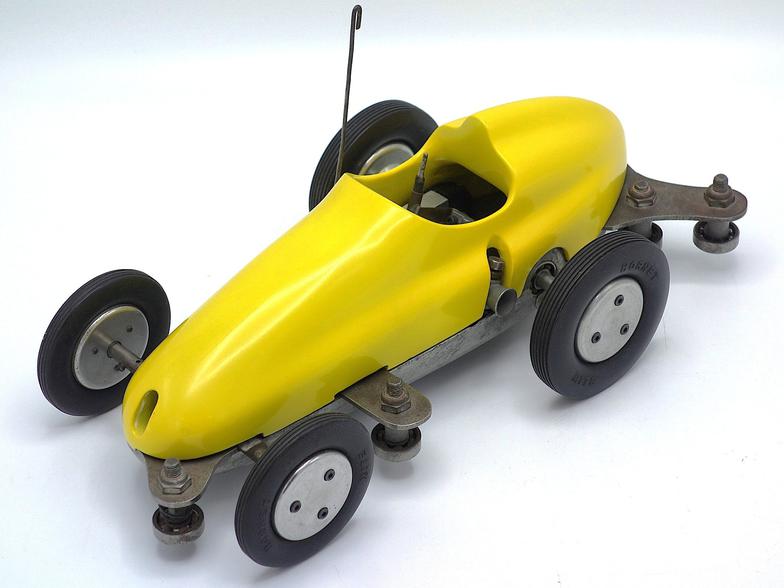
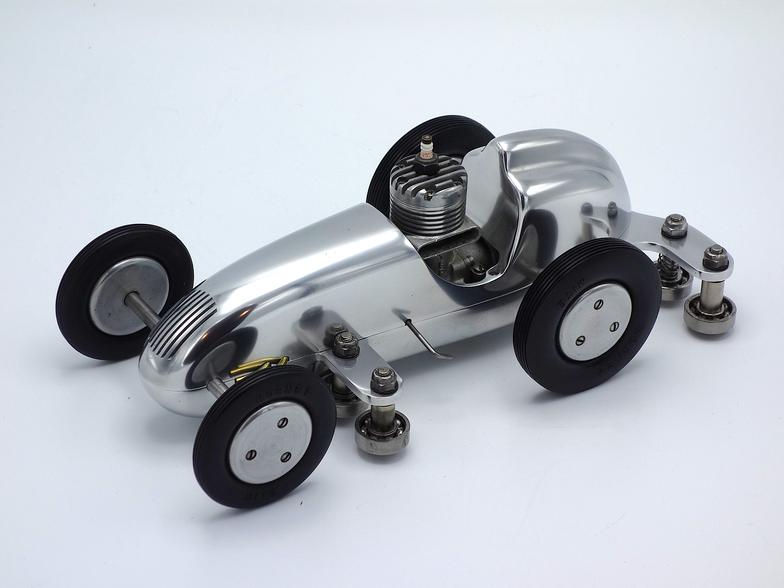
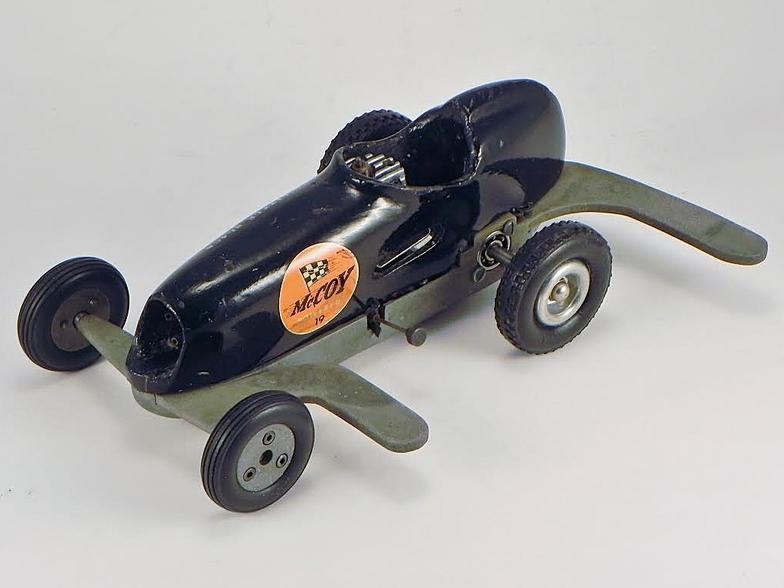
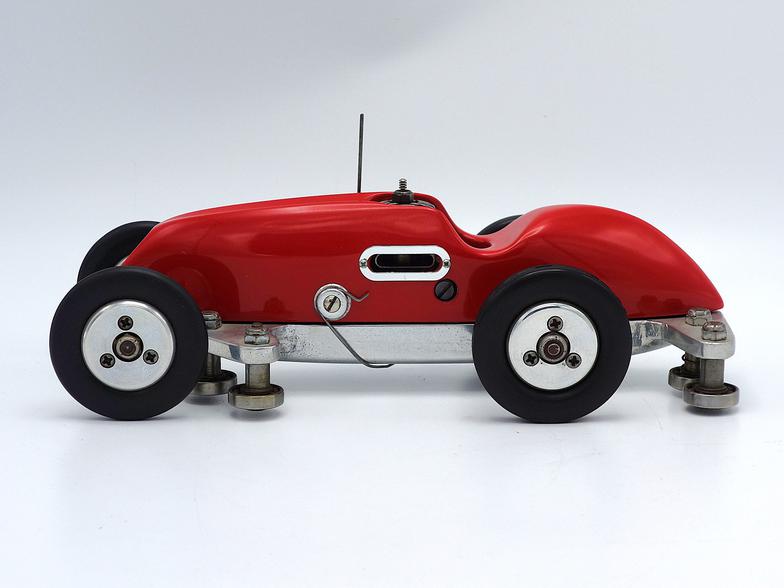
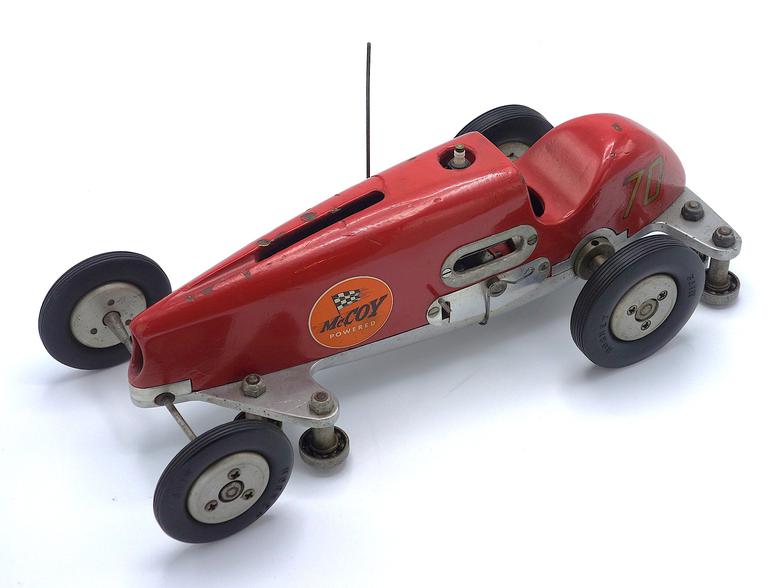
Babcock Prototype
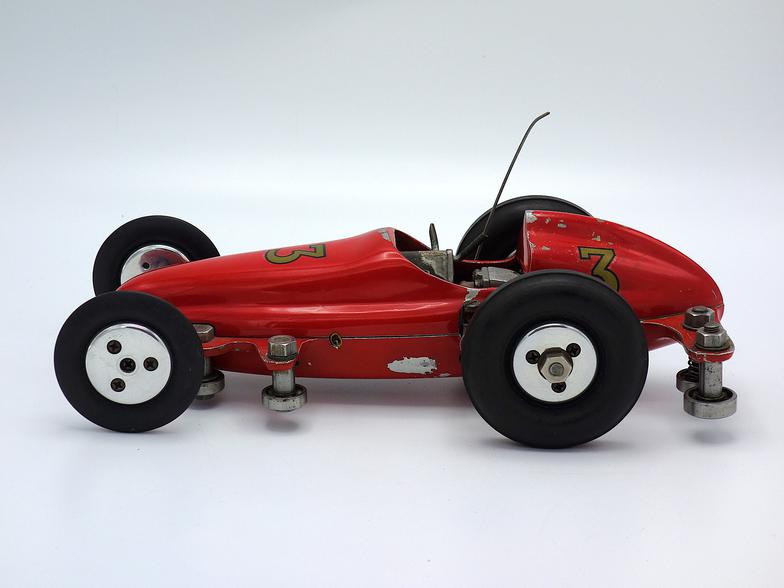
Babcock Rail Mite
Hornet Mite Rail Car
Rail Mites
In the United States, a small number of post-war mite cars were raced on high-banked oval-shaped rail tracks. But almost all rail tracks were designed for the larger .60-size cars and were not well suited to the smaller, less powerful mite cars.
Nonetheless, rail mite racing enjoyed some limited popularity across the country and a few mite cars designed specifically for rail track racing were produced. Other rail mites were simply mite size tether cars which were converted for use on rail tracks.
In England, however, a different form of rail racing emerged.
In 1949, Henri Baigent developed a round rail and rail guide system which permitted small diesel engine powered rail cars to race on road course design circuits.
Round rails were mounted on spacers above the racing surface. The rail guides (a.k.a. "zonkers") consisted of pairs of bell mouth-shaped guide rollers mounted directly under the center line of the car to permit the car to turn both right and left.
Baigent ultimately patented his round rail and rail guide system design.
The first exhibitions of the small diesel powered rail cars racing on an indoor road course design track drew large crowds and generated considerable interest in the hobby. But while diesel powered rail racing created quite a stir when it was first introduced, rail racing in England never enjoyed the wide-spread popularity associated with tether car racing.
Proxied to a 3rd place finish in the 1950 Rail Mite Nationals by Curly Glover, powered by a McCoy 19 engine
Hornet Mite rail car, powered by a Hornet .199 model engine
"Little Black Thing"
Herb Danke's unfinished custom built rail car, powered by a McCoy 19 engine.
Carlson .09 Rail Car
Carlson .19/.29 Rail Car
John Carlson's personal .09-size rail car, powered by a McCoy .09 engine
John Carlson's personal .19/.29-size rail car, powered by a McCoy 19 engine
Click on photos for more information...
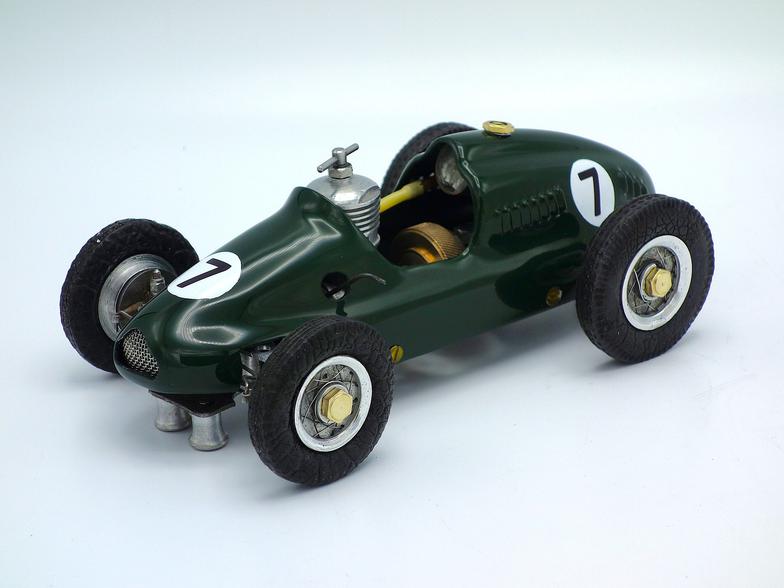
MRRC Cooper 500
English MRRC Cooper 500 rail car, powered by a 1.46 cc E.D. Hunter diesel engine
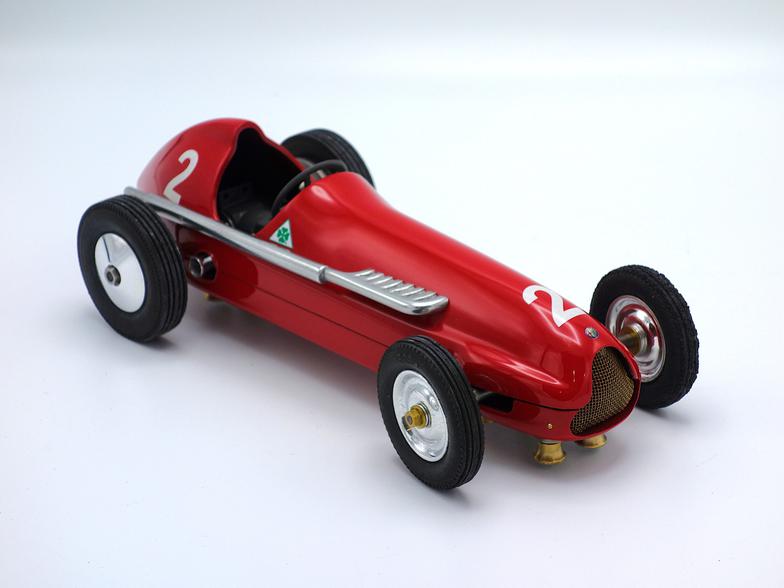
Oliver Alfa Romeo 158
Oliver Alfa Romeo 158 rail car, powered by a 1.3 cc Mills diesel model engine
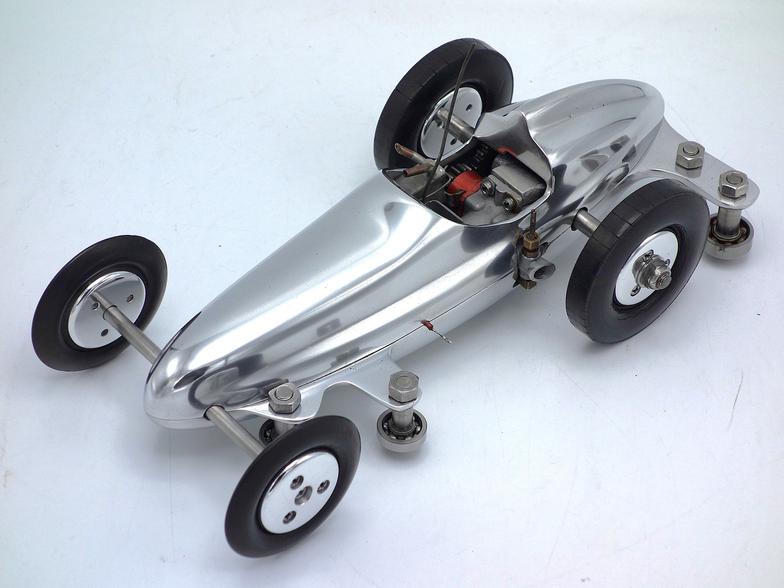
Babcock Rail Mite
John Babcock rail car, powered by a McCoy 19 race car engine with spur gear drive
Early prototype "test mule" of the Babcock Rail Mite, powered by a McCoy 19 engine with spur gear drive
