mitecars.com
email: [email protected]

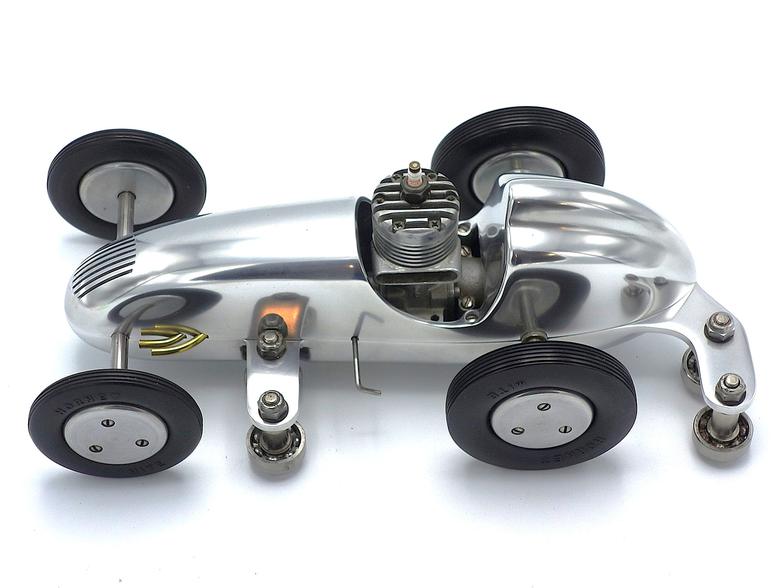
Hornet Mite Rail Car
Produced by Hornet Motor Mfg. Co
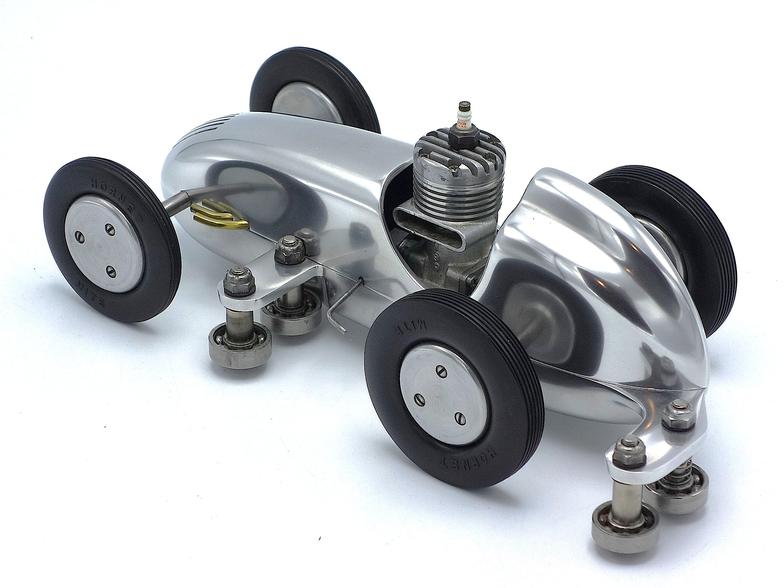
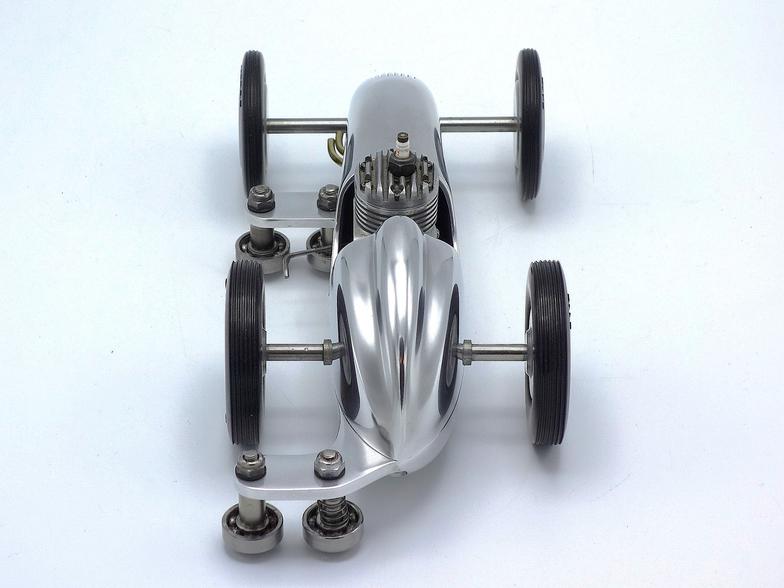
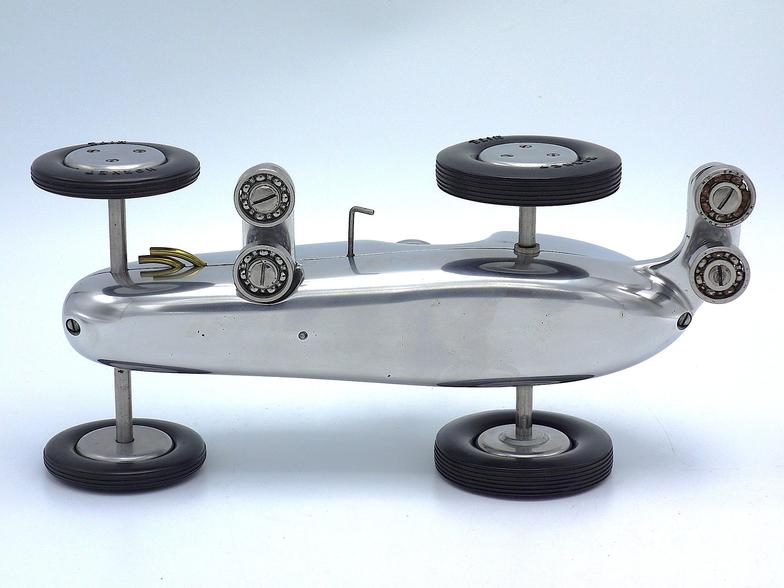
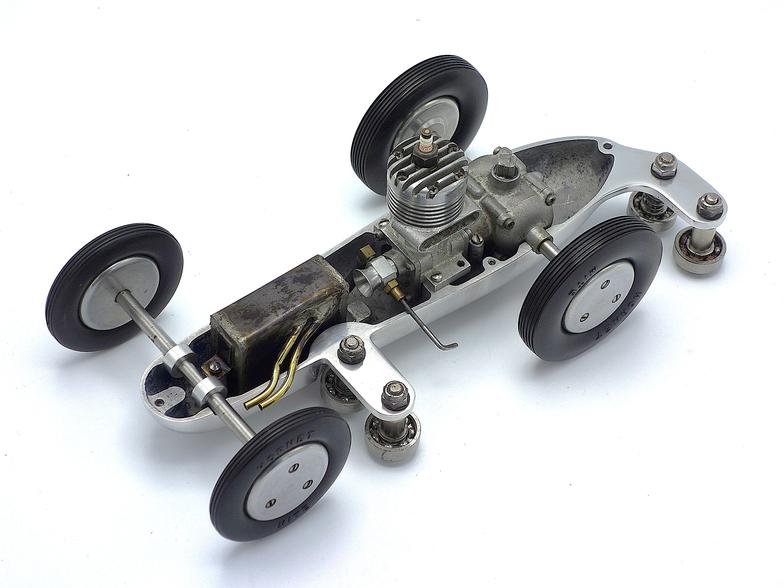
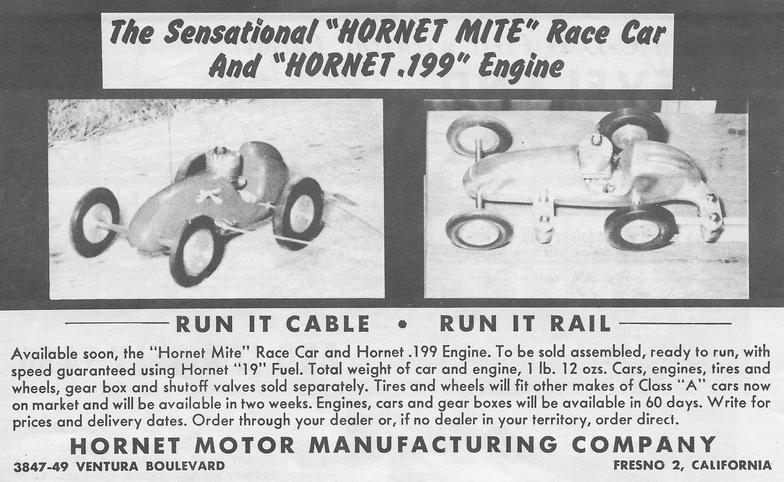
The Hornet Mite was designed by Ray Snow and was manufactured and sold by his company, the Hornet Motor Mfg. Co. of Fresno, CA. The Hornet Mite was designed for competition on either a rail track or a cable track, and the car could be fitted with either rail guides or a wire bridle.
The body and pan were cast aluminum and the car was powered by a Hornet .199 model engine. The car featured a die cast aluminum gear box with Zerol Bevel type gears. The car was fitted with Ray Snow's Hornet Mite wheels and tires on all four corners.
Even though both the Hornet .199 engine and the Hornet Mite race car were initially introduced in 1949, both the engine and the race car were plagued with production delays, due at least in part to questions surrounding the performance of the Hornet .199 engine. As a result, production of both the Hornet .199 model engine and the Hornet Mite race car was halted until well into 1950.
Compounding the problem was the $19.95 price tag on the Hornet .199 engine. Even though the engine ultimately proved to be an excellent performer, its closest competitor (i.e. the McCoy .19 race car engine) sold for half the price of the Hornet .199. As a result, only a relatively small number of Hornet .199 model engines were originally produced and an even smaller number of Hornet Mite cars were actually finished.
Interestingly, Ray Snow had originally planned to produce another race car powered by the Hornet .199 engine. That car was supposed to be a spur gear, front drive car which he called the New Hornet "Streamite". He indicated that the car would be ready for delivery by March 15, 1950.
In addition, Snow planned to produce a larger displacement .299 cubic inch model engine plus another race car tailored to the New Hornet .299 engine, with delivery of both projected to be around June 1, 1950.
Unfortunately, neither the larger .299 cubic inch engine nor either of the two new race cars ever reached production.