

mitecars.com
email: [email protected]

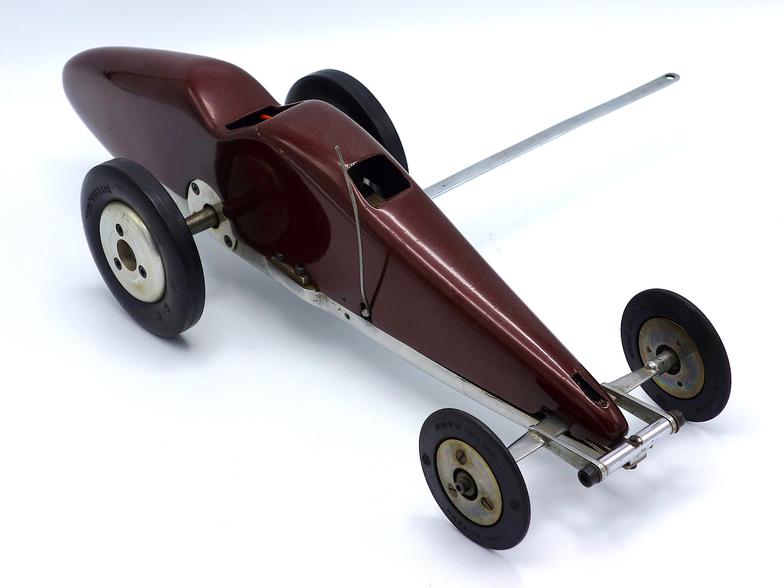
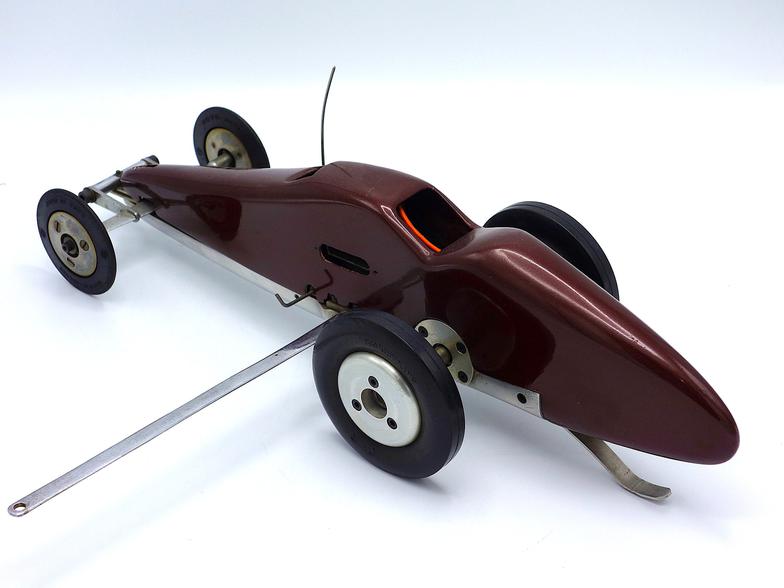
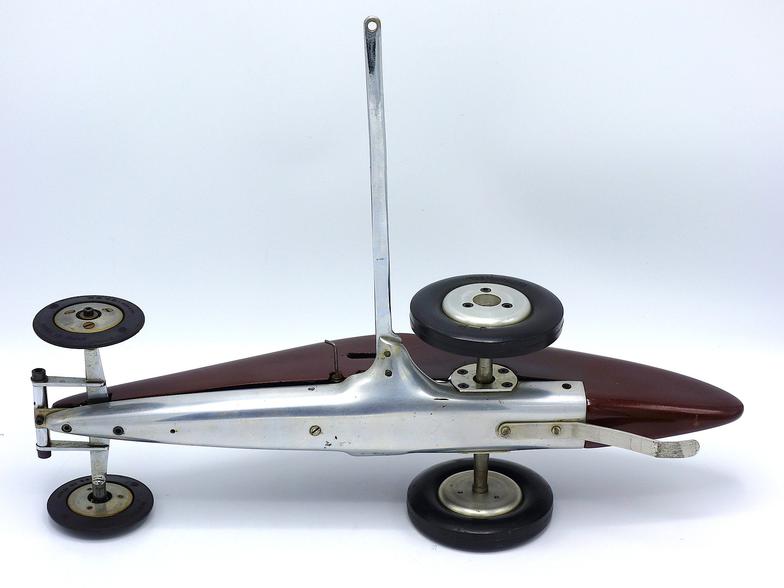
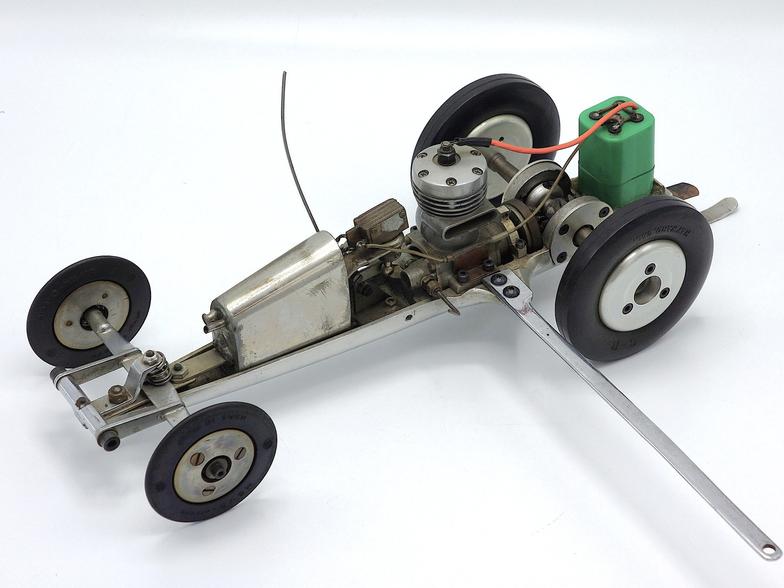
Jim Dean Mite
Originally built and raced by Jim Dean in England

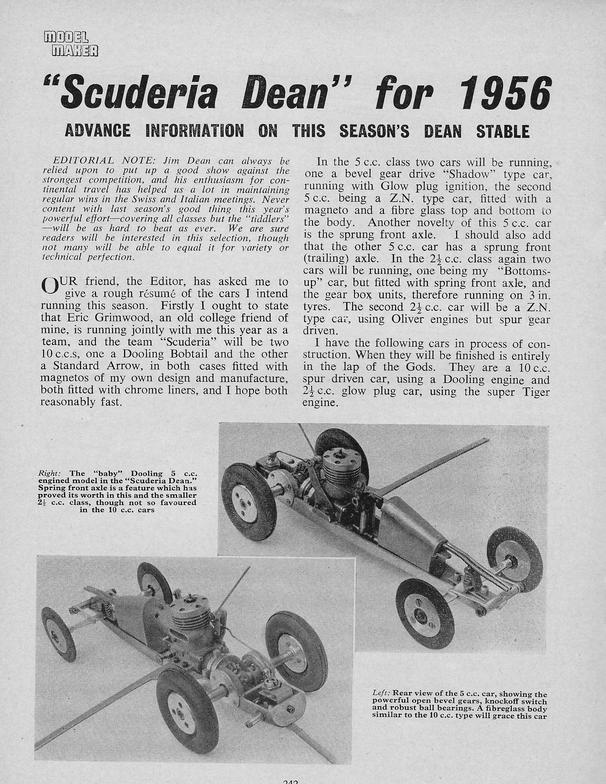
The car shown in the photos had its origins in England, where it was built and raced successfully, before being sold and subsequently campaigned in the United States where it was equally successful.
The car was built in 1956 by Jim Dean in his workshop in Slough. The design of the bob-tail pan is based on the second of two versions of Ian Moore's #11 pan for 5 cc engines, which was a scaled-up version of Moore's earlier 2.5 cc "Shadow" pan design. The first version of the 5 cc pan was so narrow that the mounting lugs of the engine had to be removed. This second version of the pan had "sponsons" added to the sides of the pan, negating the need to remove the Dooling 29 mounting lugs.
The car is powered by a Dooling 29 model engine with glow plug ignition. The trip wire serves two purposes: it closes the plunger-style fuel shut-off and it also shuts off the electric current from the battery pack to the glow plug.
The car features a trailing-arm suspended front axle, a stainless steel fuel tank, and a fiberglass body. The knife-edge front wheels and tires are Italian MovoSprint 52 Ferrari competition items. The rear wheels and tires are from C-R Products.
The car was documented in the May 1956 issue of the British hobby magazine "Model Maker". The car has been modified somewhat since the car was originally built by Jim Dean.
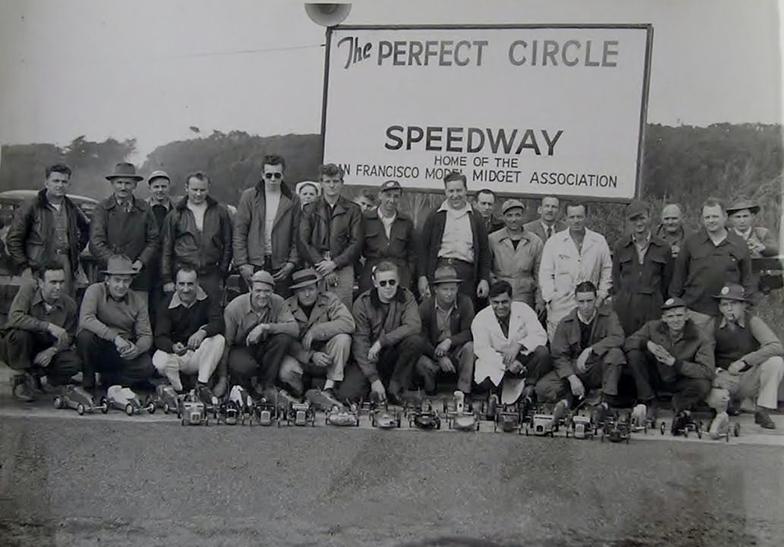
After being raced successfully in England by Jim Dean, the car was sold to an American tether car competitor, Joe Ellis of San Francisco, CA.
The car was eventually purchased from Joe Ellis' son, John, who noted that his father raced the car on the San Francisco tether track where the car established an IMRCA record of over 137 mph in the .29-Mite class.
