

mitecars.com
email: [email protected]

Originally owned by Buford "Dick" Dunn, Muncie, IN
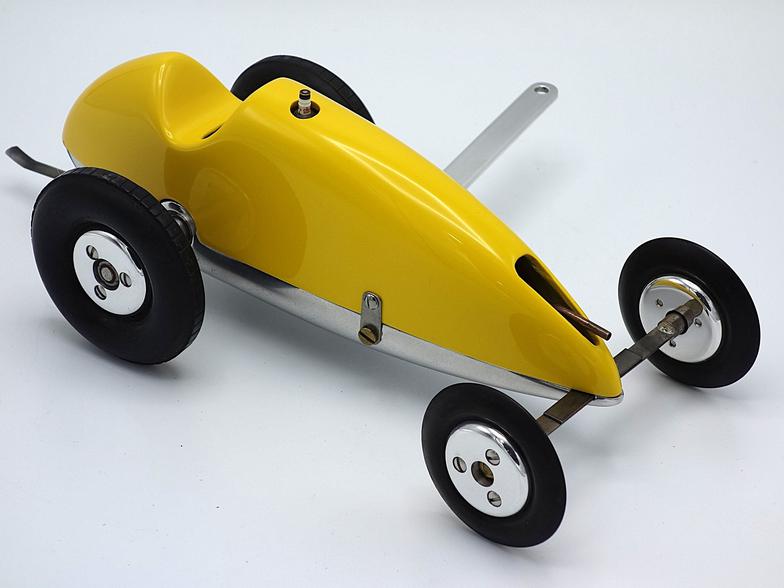
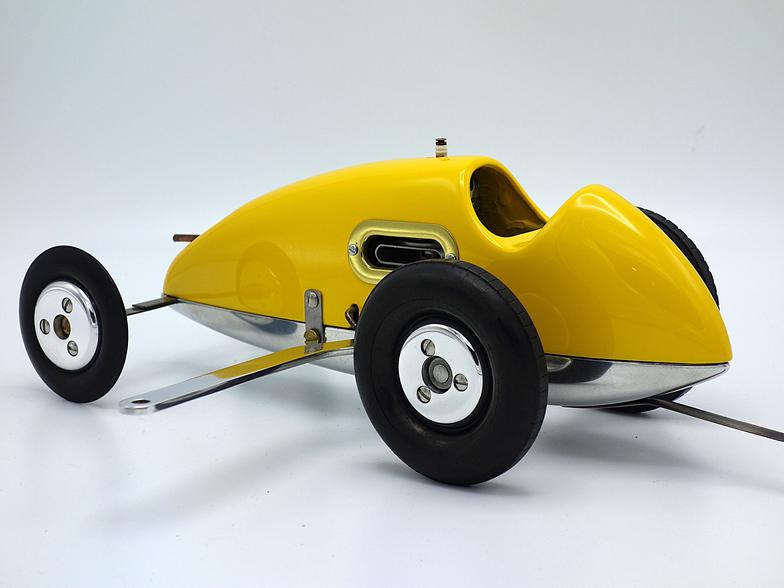
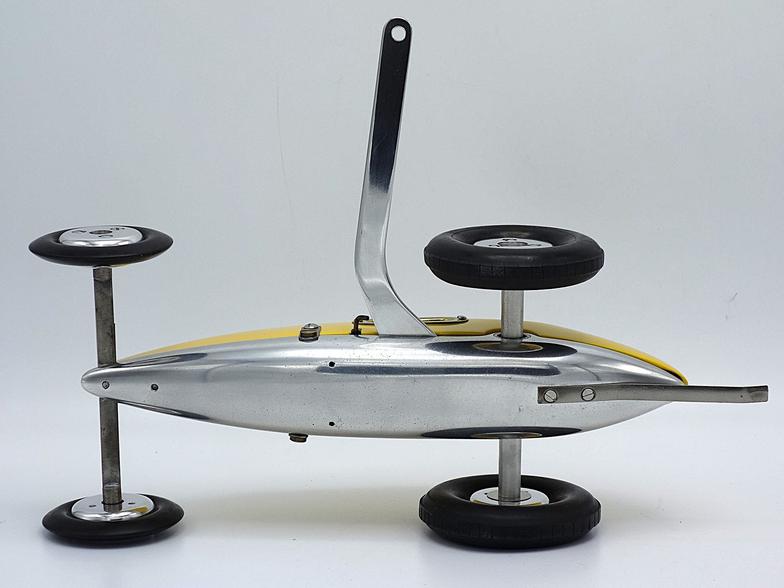
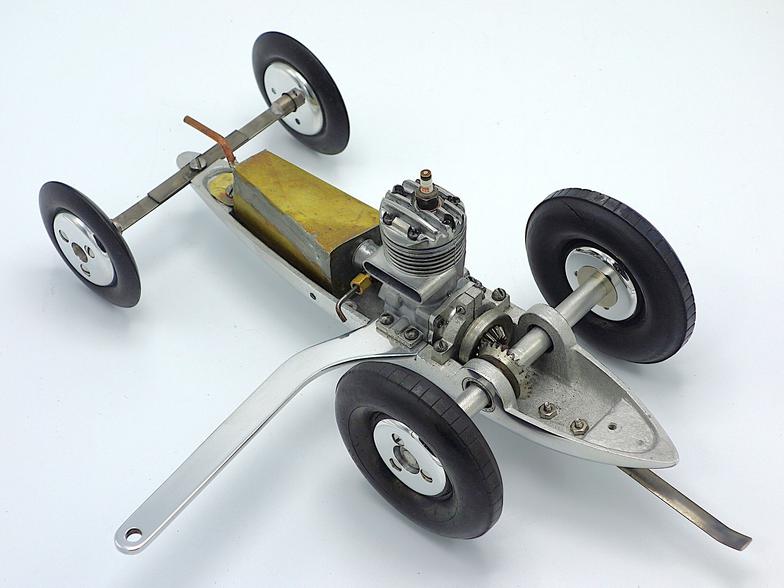
Martin Flash

Several factors contributed to the Martin Flash being a competitive tether car for nearly two decades. The basic design of the car was sound and Tony Martin's workmanship was excellent. The car was relatively easy to build, and equally important, was relatively easy to re-build and upgrade as necessary. In addition, the design of the car and its component parts evolved over time.
The design of the pan was changed, replacing the earlier "posts" cast into the front and rear of the pan with beefier "steps" cast into both ends. The design of the pan handle was changed, replacing the early "straight arm" pan handle with a curved design which provided sufficient clearance between the pan handle and the left rear tire. The design of the fuel tanks also changed, with many tanks incorporating a tube through the length of the tank to direct airflow into the venturi.
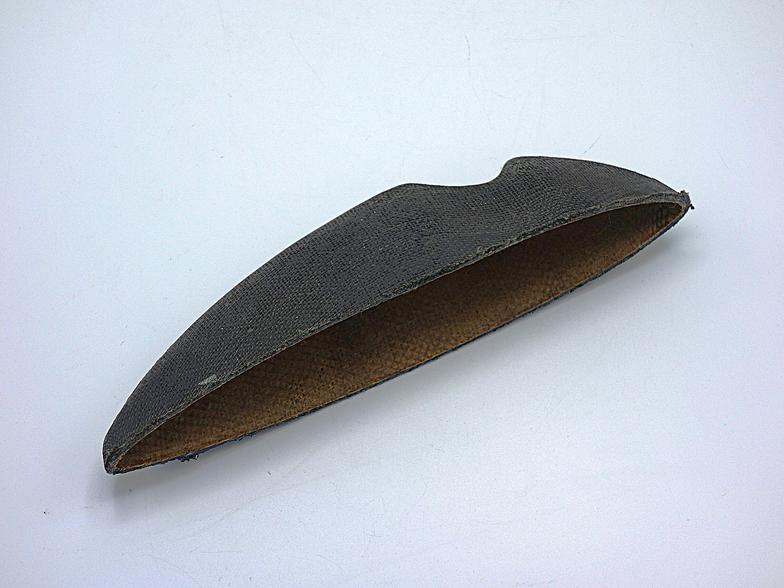
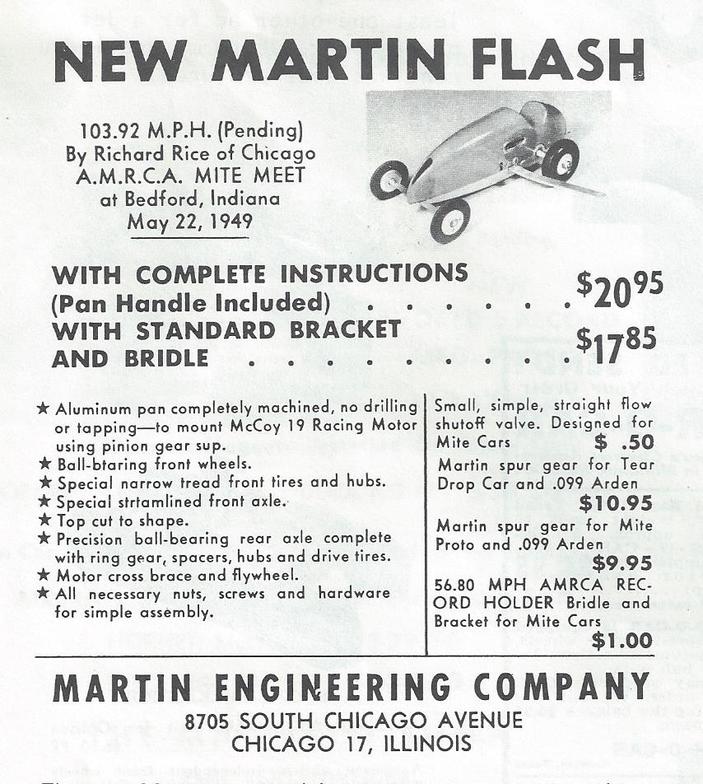
When Tony Martin introduced the Martin Flash in early 1949, the kits included a roughly-shaped block of wood which the owner could then finish to form the body of the car. But Martin soon replaced the pre-cut wood block with a sleek body made from a composite material using a woven "cloth" (purportedly made from chopped corn stalks) impregnated with a phenolic resin which hardened to provide structural rigidity. This same material was supposedly used in making some of the disposable belly tanks which were fitted on WW-II aircraft. This composite body was fully formed and the openings for the cockpit, exhaust, glow plug, needle valve, and the large air intake in the nose were scribed onto the outer surface of the body.
While these early woven fiber bodies were inexpensive and lightweight, they often were not able to withstand the rigors of tether car racing, and were particularly susceptible to exposure to hot fuel. The glow fuels of the day tended to soften the phenolic resin, and after repeated use the bodies became somewhat "rubbery", especially in the area around the exhaust opening. As a result, many of the early woven fiber bodies were ultimately replaced with hand carved wood, molded fiberglass, or custom made cast aluminum bodies.
These early woven fiber bodies completely enveloped the top and sides of the engine, and because of their tight fit, required that the cooling fins on the outer edges of the McCoy 19 cylinder head be filed down to fit inside the confines of the body. Many owners opted instead to cut away the top portion of the body to provide the necessary clearance rather than file the cylinder head fins.
The car shown in the photos is an example of a later model Martin Flash with an original woven fiber body. The car was originally owned by Buford "Dick" Dunn of Muncie, IN.
