

mitecars.com
email: [email protected]

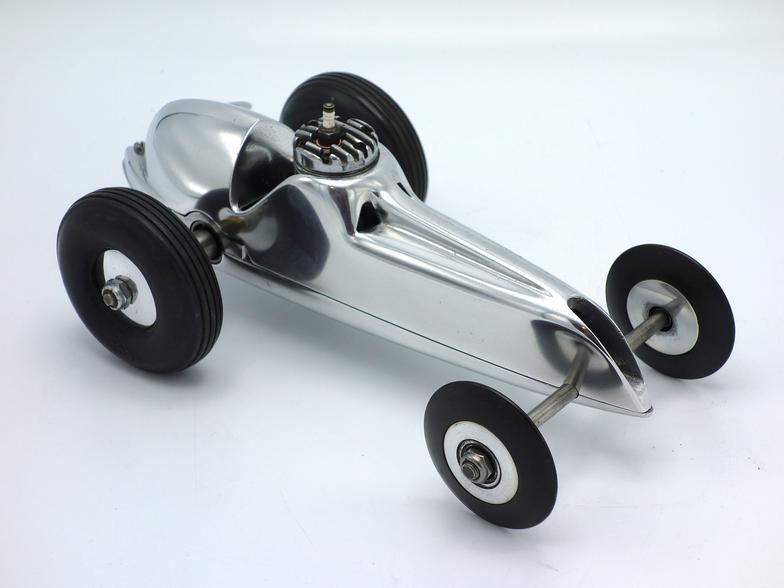
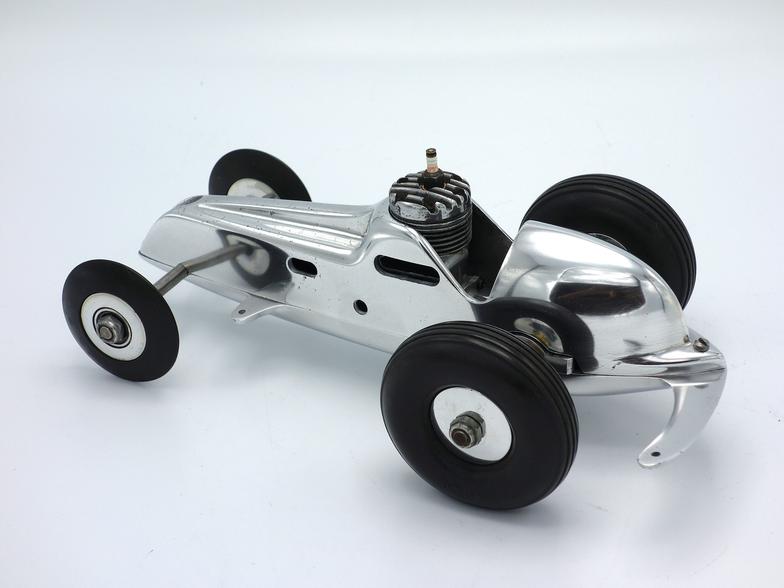
Scat Cat
Produced by Pac-A-Lite Mfg. Co., Mount Morris, MI

The Mini-Mount conversion kit produced by Pac-A-Lite Mfg. Co. proved to be successful in transforming the Thimble Drome Champion toy race car into a competitive tether racer.
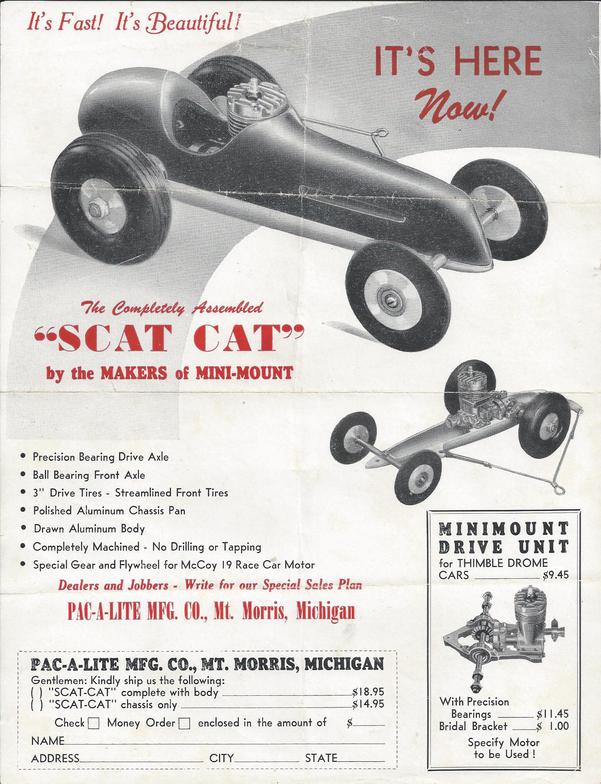
However, the owner of Pac-A-Lite, Bob Snodgrass, recognized the limitations of attempting to convert a toy race car into a seriously competitive tether racer. As a result, he and his company's mechanical designer and machinist, Clare Counterman, developed the first purpose-built mite car designed strictly for competition: the Scat Cat.
Introduced in 1949, McCoy 19 powered Scat Cats soon became "the car to beat" in the highly competitive .19-Mite class of tether car racing.
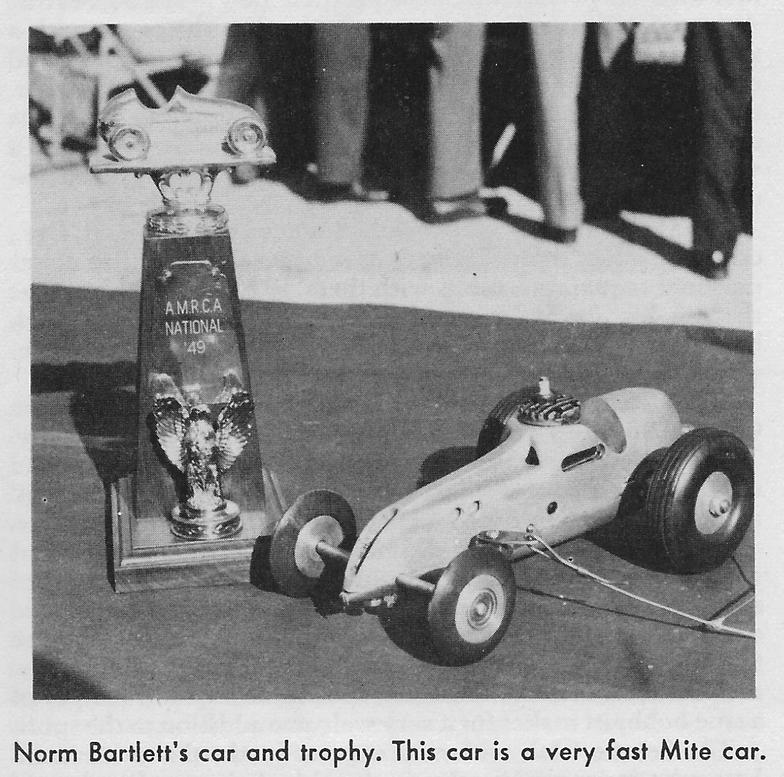
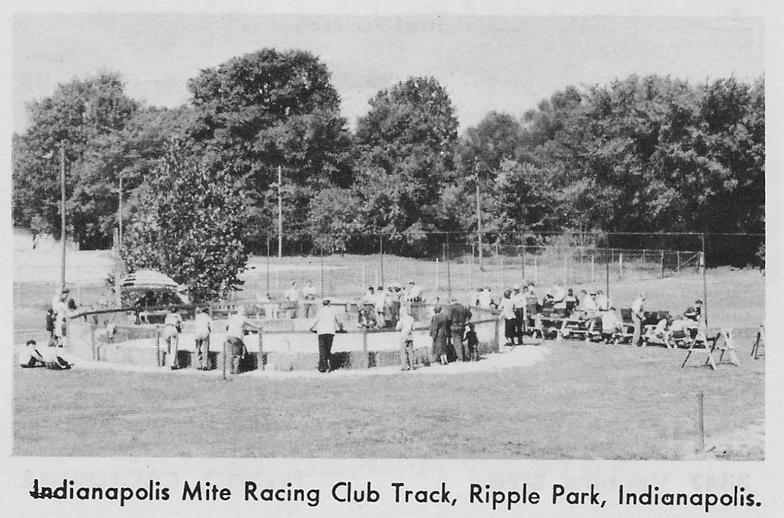
The 1949 AMRCA Mite Car National Championship races were held on the Indianapolis Mite Racing Club's newly opened track in Broad Ripple Park on September 25, 1949. The event attracted over 50 cars from throughout the Mid-West, and the event turned into a show of force for Pac- a-Lite cars and products. Scat Cats dominated the event, followed closely by Mini-Mount equipped Thimble Dromes.
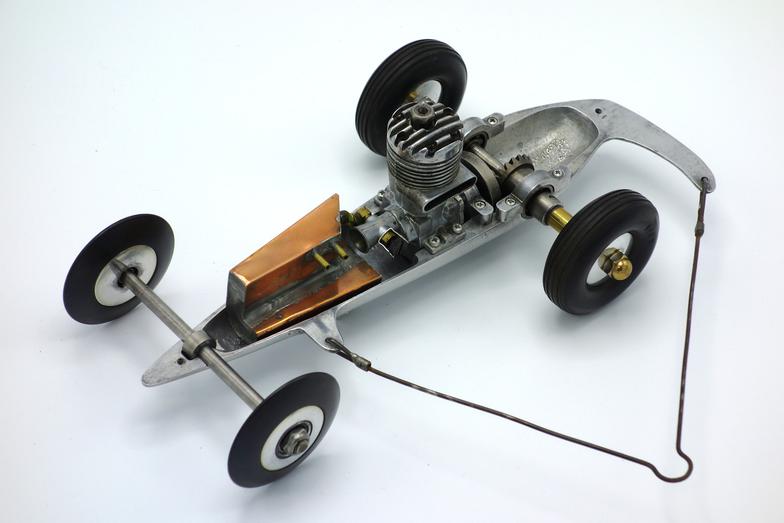
The Scat Cat shown in the photos is a relatively early model as evidenced by the individual rear axle bearing caps. Later models saw the individual bearing caps being replaced with a single U-shaped cap.
The earliest versions of the Scat Cat had the front axle mounted to the pan with a single machine screw inserted through a hole drilled in the front axle and then secured through a tapped hole in the pan. This proved to be a weak point for those earliest cars since any crash which resulted in significant contact with the front axle often resulted in the front of the pan breaking off at the point where the axle was mounted to the pan. Later cars were fitted with a steel collar on the front axle to position the axle in the pan and then the axle was secured in place with the cast aluminum body. This modification negated the need to drill and tap a hole in the pan to secure the front axle.
